
ADVERTISEMENT
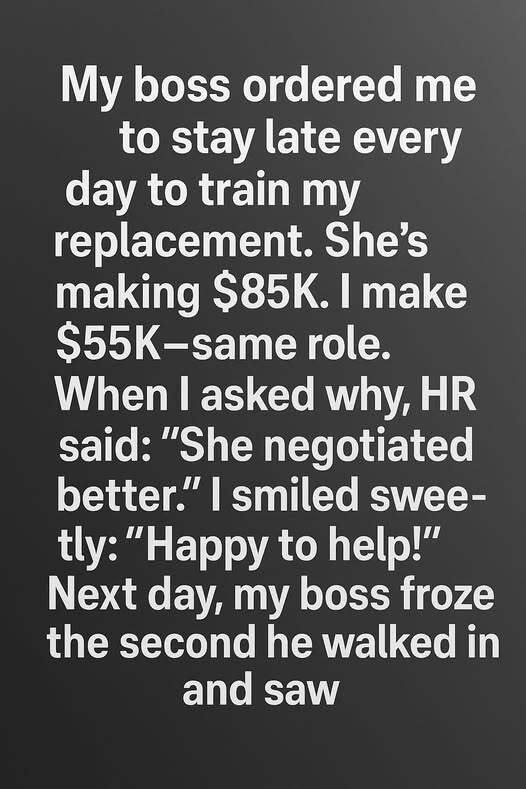
By day two, my replacement understood: she wasn’t replacing one employee—she was replacing two, maybe three. She wasn’t angry; she thanked me for being honest. She had been sold a fantasy: a streamlined role with clear boundaries and a generous salary. No one told her the job had been held together by unrecognized overtime and fear of disappointing leadership.
Meanwhile, my boss paced the halls, making tense phone calls. HR sent vague “clarification questions.” My boss asked me to “walk through a couple advanced processes.” I declined with the same phrase he’d used to box me in for years:
“That’s not my responsibility.”
The Exit
On the final day, after completing the last duty in my official job description, I printed and signed a simple resignation letter. No two-week notice. No explanation. Just a clean exit, effective immediately.
My boss looked like the floor had been pulled out from under him. My replacement hugged me, wished me well, and thanked me for being honest about the workload. She wasn’t my enemy—just another woman trying to earn a living. She deserved the truth, and I gave it to her.
My boss, on the other hand, now faced a department without the person who had silently done the work of multiple employees. Every task he assumed “just happened” was no longer happening. Every crisis I had quietly handled was now his problem.
Closure, Not Revenge
I walked out feeling lighter than I had in years. It wasn’t revenge—it was closure. The moment I stopped letting a company define my worth.
Two weeks later, I accepted a job offer from a company that respected my value. This time, I negotiated hard—not out of arrogance, but out of understanding. I had proof of my worth, and I intended to be paid accordingly. They didn’t hesitate.
The Lesson
Once you know your worth, you stop settling for less. You stop working for people who treat loyalty as a discount. You stop giving your energy to companies that assume dedication equals free labor. And most importantly, you stop believing you’re replaceable just because someone else costs more.
Sometimes, the best lesson a boss can learn is the one they force you to teach: realizing that replacing you isn’t as simple as hiring someone new.
ADVERTISEMENT
