
ADVERTISEMENT
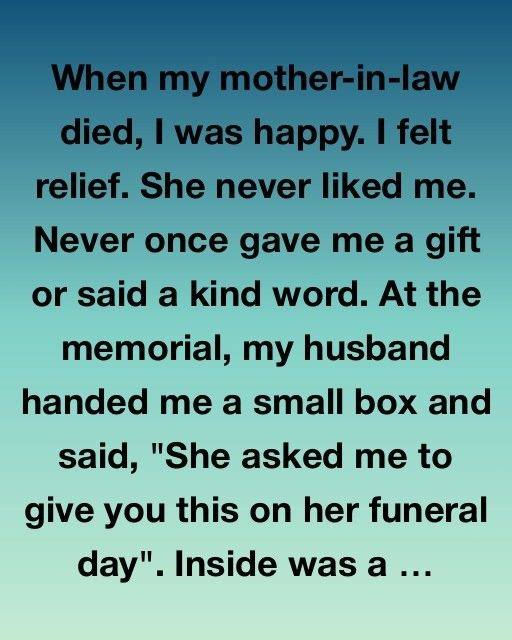
He handed me an envelope. “It’s a key,” he said. “And a note: ‘She’ll know what it’s for.’”
I didn’t. Not immediately.
Now I understood.
We drove to the house. It felt quieter without her. The attic door was behind a faded curtain. The key fit perfectly.
Inside, the air smelled of cedar and dust. A trunk sat in the center. I opened it.
Journals. Dozens. Some leather-bound, others spiral notebooks. I pulled one out—dated 1973.
She had written everything. Her fears. Her loneliness. Her longing to paint. Her dream of Paris. Her regret.
One journal held a photo of a watercolor—a woman standing alone in a garden. On the back: Me, before I disappeared.
My throat tightened.
In another, she wrote about Lucas. Her parents’ disapproval. Letting him go. Keeping the necklace as a memory of who she’d been.
I didn’t tell my husband everything. Just that she’d left behind journals. He didn’t press.
Weeks later, I did something unexpected. I submitted a painting—based on her journal photo—to a local art show. Under a fake name.
It was accepted.
People loved it. One called it “quietly heartbreaking.”
I submitted two more.
Then a gallery reached out. “Who’s the artist?”
I told them. “She was my mother-in-law. She passed recently. These were in her attic.”
Soon, her work was in a real exhibit. Not huge, but meaningful. People cried in front of her paintings. Said they saw themselves in the quiet ache of her brushstrokes.
I wish she could’ve seen it.
Or maybe she knew. Maybe that’s why she left me the key.
Months later, another letter arrived. From the lawyer. A safety deposit box—only accessible by me.
Inside was a check.
$40,000.
And a note:
continue READING..
ADVERTISEMENT
