
ADVERTISEMENT
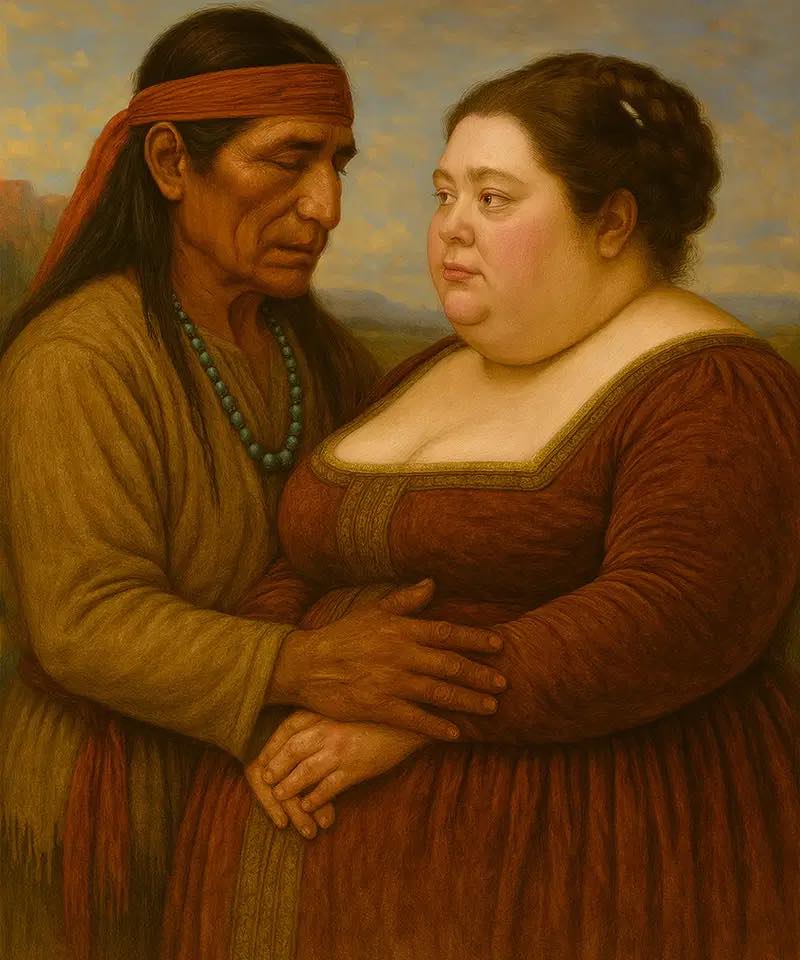
The Healer of the Red Desert: A Historical Romance About Courage, Worth, and a Love That Chose Her
It did not strike like thunder. It grew like shade on a hot day. One evening he lifted her face with work-rough hands and kissed her with a reverence that made her tremble for all the right reasons. They did not speak of replacing what had been lost. They spoke of recognizing what had arrived.
“You are not a solution arranged on paper,” he said later, hand over hers. “You are my partner in work and rest, in hope and harvest.”
And then, one afternoon, dust rose on the horizon with the regular rhythm of hooves.
The House of Marble Returns
Soldiers. A carriage. Her brother Rodrigo, polished and stern, dismounting onto soil that tried to cling to his fine boots. He stared at Jimena as if a portrait had stepped out of its frame and learned how to breathe.
“I’ve come to take you home,” he said.
“This is my home,” she answered, calm as a lake at dawn.
Paperwork was presented, stamped and officious. A priest arrived with concern for her soul. Neighbors watched from a distance, measuring intentions. Tlacael stood at her side, straight and silent as a pine.
“We will not raise hands,” he said. “We will speak.”
And Jimena spoke. Of work that mattered. Of the people she had come to love. Of a life that did not weigh her on a scale each morning. She spoke with the authority of a woman who has looked at herself without apology and recognized her own worth.
Pressure mounted anyway. Promises were made of “protection” and “restoration.” For the first time since the carriage had brought her to the desert, she felt the old walls closing in.
The return to the city was a long breath she could not complete. At the mansion, her father’s surprise was almost humanizing; even he could see she was not the daughter he had sent away. Plans were announced. A convent was mentioned. Penance. Correction. She listened, then answered with gentle finality.
“No.”
It startled the room. It also drew witnesses.
By the following day, the courtyard filled with people who had traveled far to speak on her behalf. A rancher with a healed leg. A new mother with a thriving infant. An elder whose pain had finally relented. One by one they told the same truth in different words: this woman brings health and hope. She chose us. We choose her.
The priest cleared his throat, eyes softer than when he arrived. “Sir, it is not my place to counter a father,” he said to Don Patricio, “but I can recognize vocation. God’s work is evident in your daughter’s hands.”
And then the desert itself arrived.
Tlacael rode in with leaders from neighboring families and settlements. Not with weapons raised, but with dignity. He stepped down, crossed the courtyard, and bowed—not to the father, but to the woman who had built a life with him.
The moment held, taut as a pulled string. It could have snapped. Instead, a sound like a thread letting go—soft, decisive—ran through the crowd. Jimena’s mother reached for her daughter’s hand. “Forgive me,” she whispered. “I was busy protecting a reputation and forgot to protect a child. I see you now.”
Jimena embraced her gently. “I forgive you. And I go with the life that loves me back.”
Her father stood very still, surrounded by testimonials he had not commissioned. He looked at the woman before him, no longer a ledger entry, no longer a project to manage. Finally, he nodded, the smallest surrender a large man can make.
“You have my blessing,” he said.
Five Years Later: A Life Built by Choice
The clinic stood where the garden began, its doorway shaded by woven reeds. Children darted between rows of herbs. A bell rang when help was needed; a kettle sang when remedies were ready. Jimena moved through her day with the ease of long practice, sleeves rolled, smile ready, charts neat as quilts.
She was known now as a midwife and a healer. Families came from days away because someone told them about “the woman in the red desert” who listened as carefully as she mixed. Tlacael handled trade and council meetings, returning at dusk with news and laughter, bending to kiss the crown of her head before washing dust from his hands. Two little ones thundered across the yard, trailing the fragrance of sage and sun.
“Do you ever wish we had chosen differently?” he asked her one evening, not for the first time.
She leaned into his shoulder, watching the horizon turn gold. “No,” she said simply. “I chose a life that chose me back.”
The sun set slow and grand, as it does over lands that remember. In that soft light, the girl judged in ballrooms became the woman trusted on doorsteps. The daughter measured by appearances became a wife valued for partnership, a mother admired for patience, a neighbor known for skill, a leader who healed bodies and bridged divides.
Some romances announce themselves with trumpets. This one arrived like water finds rock—persistent, patient, carving a home where none seemed possible. And in the end, the loudest verdict did not come from society or family or papers stamped and filed. It came from a community that thrived, from children who slept through the night, from a man and woman who looked at each other each morning and chose again.
When love is given the chance to see clearly, it does not merely accept. It honors. It builds. It blesses.
ADVERTISEMENT
