
ADVERTISEMENT
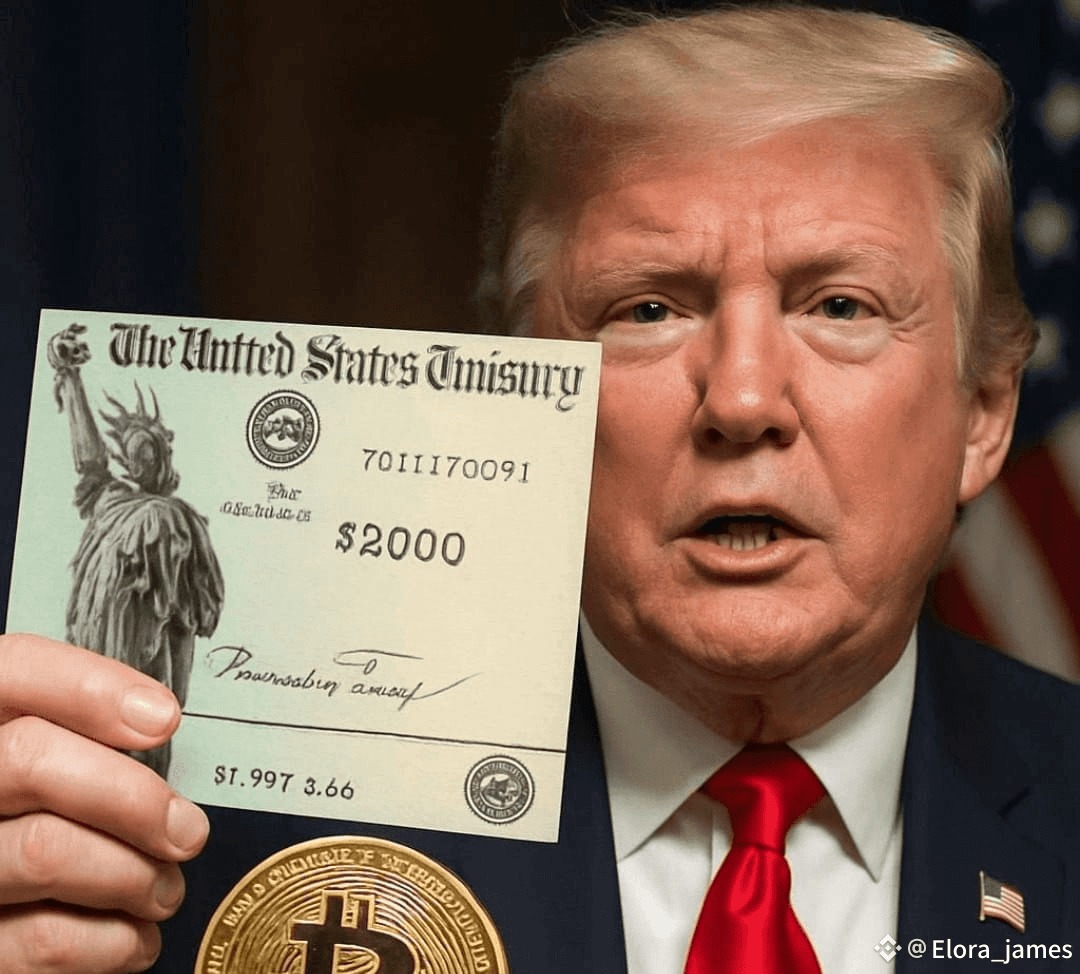
Speculation had been swirling for days, but on Sunday morning President Trump ended the guessing game with a declaration that instantly ignited every corner of the political world. In a post on Truth Social, he announced a proposal to give every American a $2,000 “tariff dividend,” funded by revenue collected from tariffs placed on countries across the globe. The promise was bold, sweeping, and timed in a way that guaranteed maximum attention. Supporters celebrated it as a populist masterstroke. Critics saw it as legally dubious, economically shaky, and suspiciously convenient after a rough political week for Republicans.
Trump framed the proposal as a direct benefit for ordinary Americans — “not the rich ones,” he emphasized. He claimed the tariffs his administration imposed had already pulled in “trillions,” boosted retirement accounts, and fueled economic growth without elevating inflation. His message was simple: tariffs were working, and those who doubted that were, in his words, “FOOLS.”
Treasury Secretary Scott Bessent attempted to add clarity — or at least soften expectations. Speaking on ABC’s This Week, he indicated that the dividend might not take the form of checks in the mail. Instead, Americans could see the benefit show up as a reduction on their tax bills. The shift in framing was subtle but important: a direct payment is politically powerful but financially heavy. A tax credit, on the other hand, costs less upfront and doesn’t require the logistical machinery of cutting and distributing checks to over 330 million people.
Even with that adjustment, the numbers remain daunting. Between April and October, U.S. import duties generated roughly $151 billion. Projections for annual revenue hit around $500 billion — an enormous sum, but nowhere near enough to fully support $2,000 payments to every American without blowing a crater in the budget. The pandemic stimulus checks, which delivered the same amount, cost roughly $464 billion. To replicate that in today’s economic climate would add immense strain to a national debt that already exceeds $37 trillion.
Republicans, still reeling from losses in several key blue-state races linked to voter frustration over rising living costs, were noticeably split over the proposal. Some celebrated Trump’s populist flair. Others rolled their eyes. Ohio Senator Bernie Moreno captured the skepticism succinctly: “It’ll never pass. We’ve got $37 trillion in debt.” He’s not alone. Fiscal conservatives argue the plan is unrealistic unless paired with drastic spending cuts or tax hikes — both political poison.
Still, not all tariffs face legal jeopardy. Those concerning steel, aluminum, and automobiles are widely considered stable. But Trump has also used tariffs as foreign policy leverage, imposing them in negotiation tactics with China, Europe, and Mexico. Those efforts sometimes produced diplomatic benefits, other times sparked backlash and retaliatory measures. A dividend funded by such unpredictable revenue streams raises questions about sustainability. What happens if trade partners retaliate? What if courts intervene? What if global markets react adversely?
Continue READING…
ADVERTISEMENT
